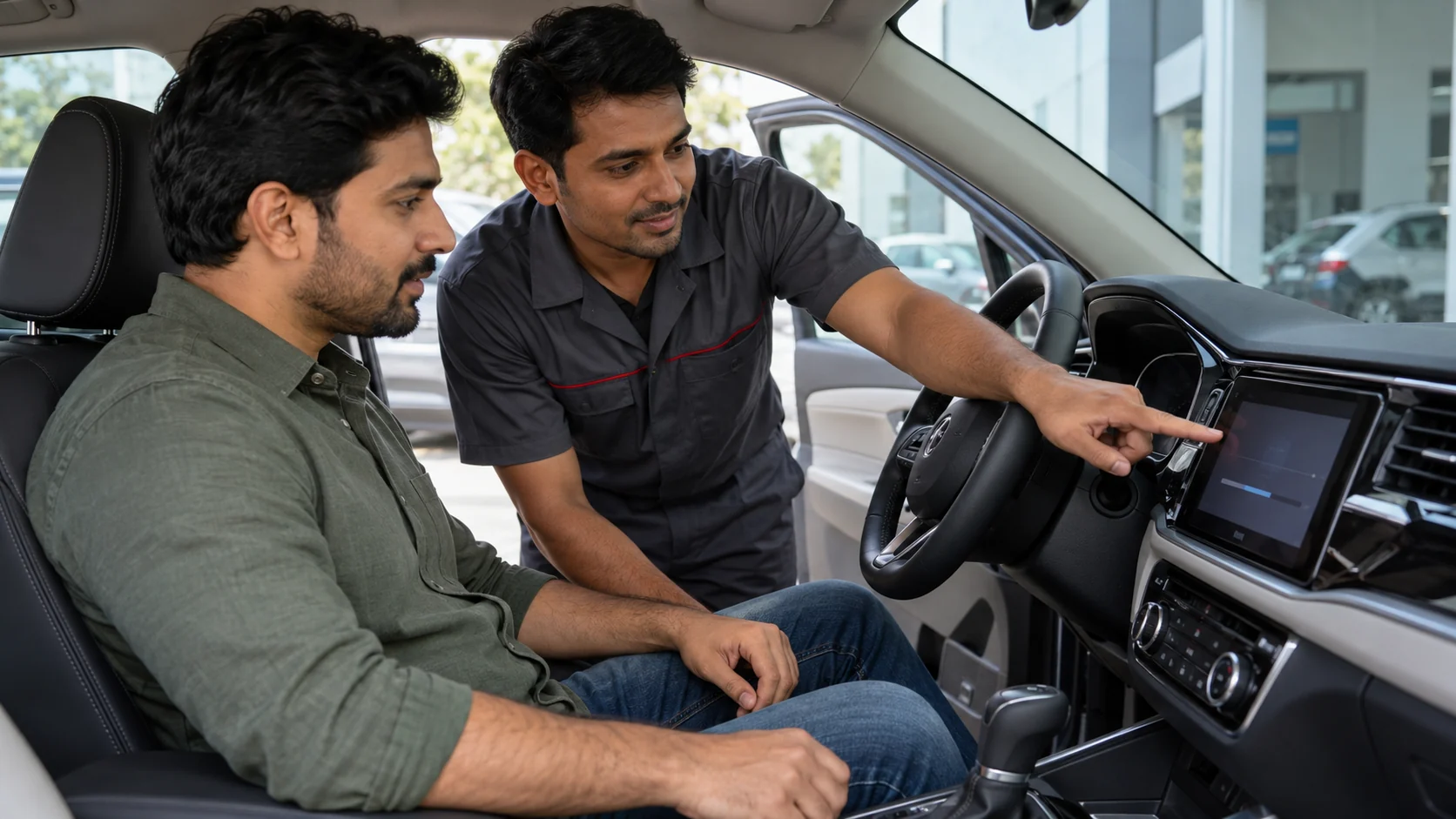
A warning or diagnostic record can help direct an investigation, but it does not by itself explain every cause or identify a complete repair.
Distinguish a signal from a diagnosis
A warning or diagnostic record can help direct an investigation, but it does not by itself explain every cause or identify a complete repair. Follow the owner-manual instructions for the actual warning and contact appropriate support. Avoid clearing an alert merely to remove it from view or treating an application suggestion as a confirmed fault.
Organize service information
Keep the date, vehicle identification, work description and service-provider information with each record. When a report is unclear, ask the provider what was observed and what was verified after the work. A readable history helps the next technician understand the context. It also makes it easier to distinguish completed work from an item that was only recommended.
Match the schedule to the vehicle
Use the manufacturer maintenance schedule for the exact vehicle and its operating conditions. Electric, hybrid and combustion vehicles have different systems and requirements. Digital reminders can help organize the process, but should be checked against the official guidance. Leave high-voltage and safety-critical work to appropriately qualified professionals rather than attempting it from a general article.
Related coverage and primary reference
Explore Automotive Technology and our Vehicle Diagnostics and Maintenance coverage.
Primary reference: U.S. Alternative Fuels Data Center: electric vehicle maintenance. Interpretations and checklists are RealityEquation editorial analysis. This article is background information, not a new launch announcement or a claimed hands-on product test.